Where the light actually gets in
There are four routes, and no amount of good manufacturing removes all of them.
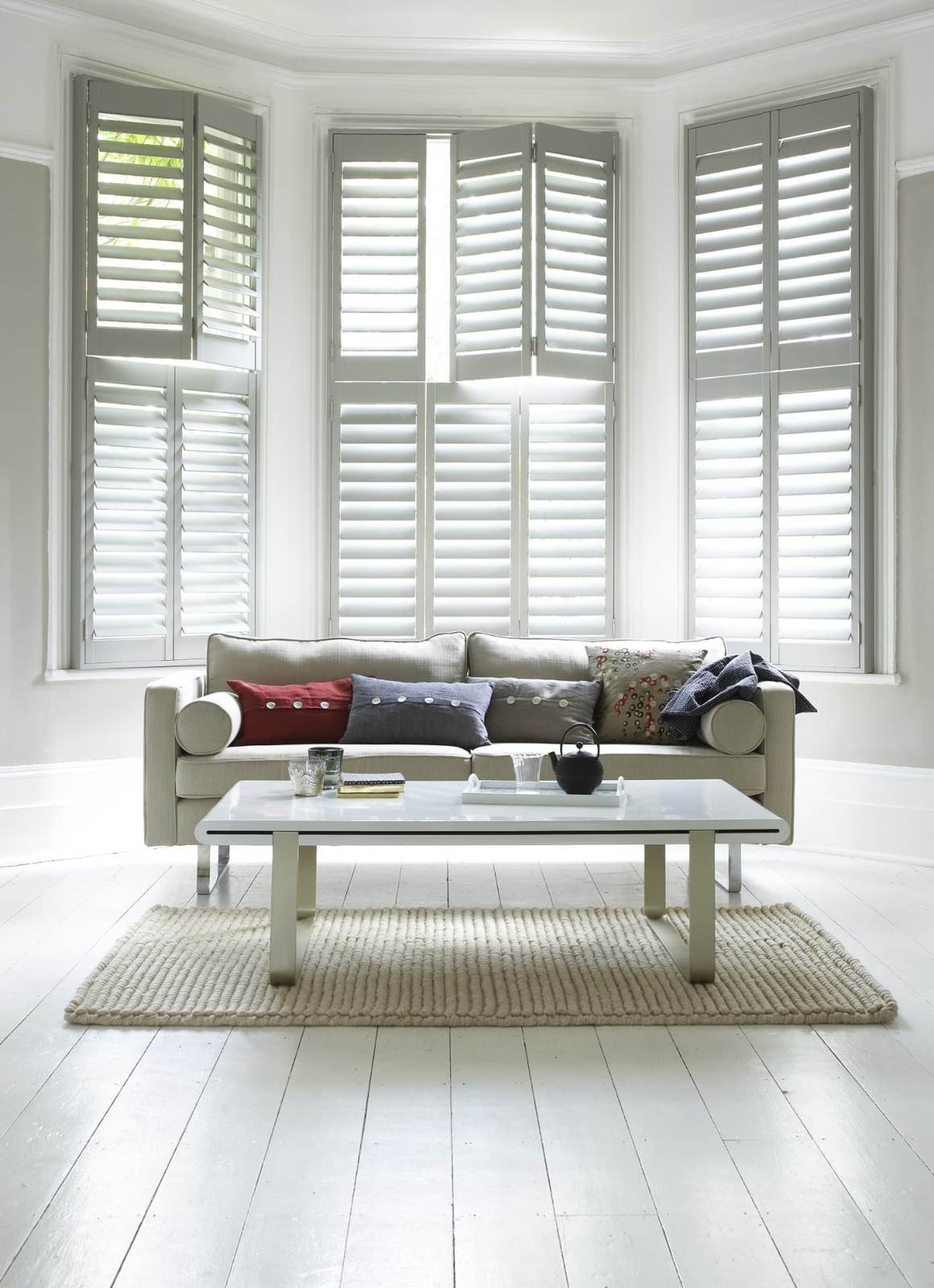
Between the louvres. Closed louvres overlap each other, but they are separate moving parts that have to clear one another to rotate. That overlap is a seal against sight lines, not against light, and on a bright morning you will see fine horizontal lines of daylight across the panel.
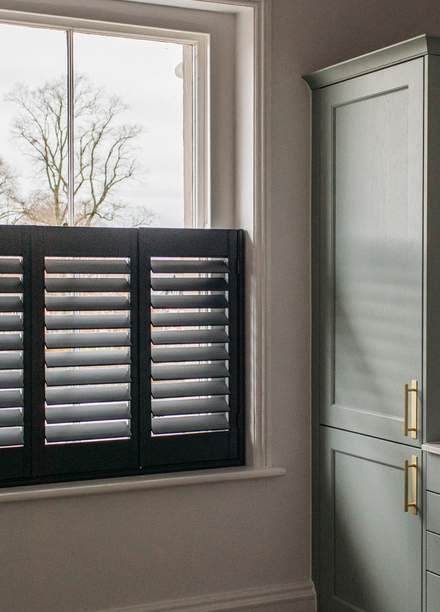
Around the panel edges. A panel has to have clearance to swing without binding, so there is a small gap where it meets the frame and where two panels meet each other. It is millimetres, and on a south facing window in June, millimetres are enough to read by.
Around the frame. Where the frame meets the plaster, particularly in an older house with a reveal that is out of square, there can be small variations that let light through.
Through the panel itself, in one specific case. A louvred panel is solid timber, so no light passes through the blade. This is the one route that is genuinely closed.
How dark does a closed shutter actually make a room?
Dark enough to sleep in for most adults, most of the time. Considerably darker than a lined curtain that does not quite meet in the middle. Not dark enough for a baby who wakes at first light in midsummer, a shift worker sleeping during the day, or a room used for projection.
The honest test is this: if you would describe your requirement as dim, shutters alone are fine. If you would describe it as dark, they are not.
The two ways to get real blackout
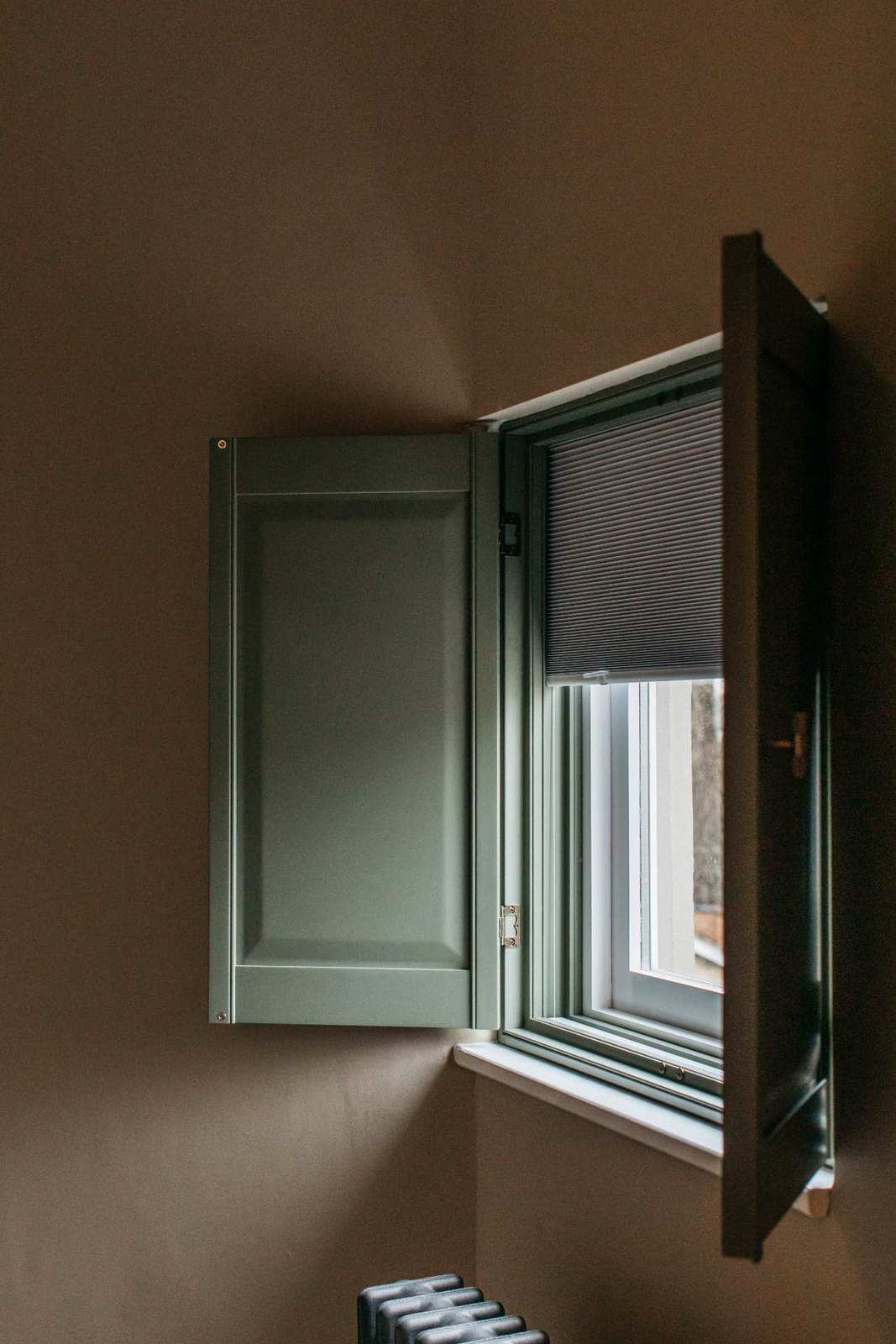
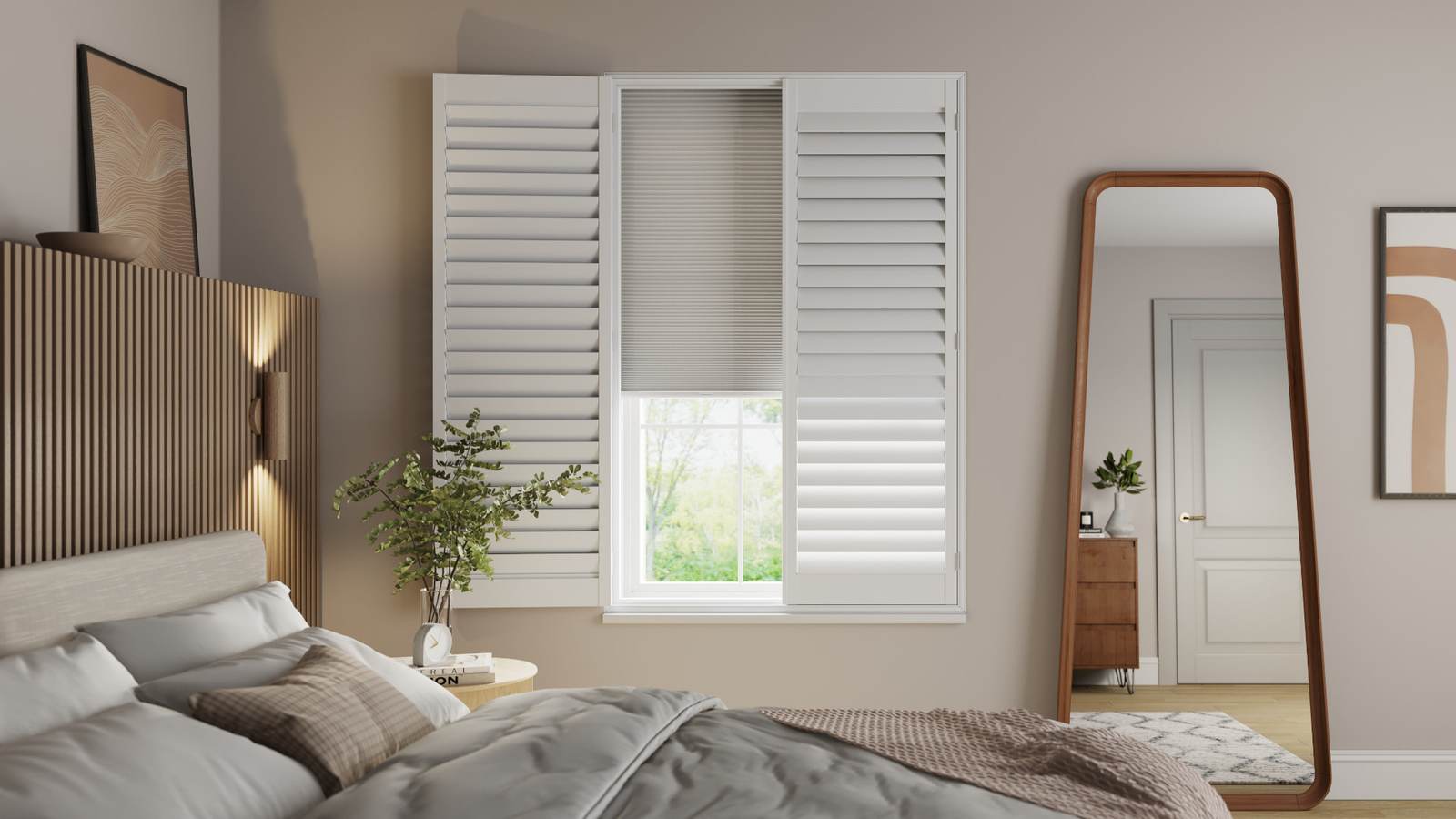
The first is an integrated blackout blind fitted behind the shutter panels within the same frame. The blind does the blackout, the shutters do everything else: the look, the daytime light control and the privacy. Day to day the blind stays up and you would not know it was there.
The second is a separate blackout roller inside the reveal with the shutters face fitted over it, which achieves the same result and is sometimes the better answer where the reveal is shallow or the window shape is awkward.
Either way, understand that a blackout fabric still needs side channels or brush strips to control light bleed at the edges. A roller hanging in a reveal with 10mm gaps down each side is not a blackout solution either, and we will say so.
How we handle it in practice
This bedroom is the standard specification when somebody tells us at survey that the room needs to be genuinely dark. Shutters at the window for the look and the daytime control, with blackout blinds integrated behind the panels for the nights. The customer gets the finish they wanted without discovering the limitation six weeks after fitting.
From our projects
Shutters with integrated blackout blinds
For the bedroom where shutters alone were never going to be dark enough.
See the projectWhat about solid panel shutters?
Solid panels, with no louvres at all, get closer. They remove the between-the-louvre route completely, which is the largest of the four. They still have edge and frame gaps, so the room will be dark rather than black, and you lose the tilt control that makes a shutter a shutter. They are a design choice as much as a light choice, and they suit period cottages and studies more often than bedrooms.
A note on bedrooms specifically
In a child's room the requirement is usually stricter than the parents expect, because the thing that wakes a small child is a line of light across the ceiling rather than general brightness. If in doubt, specify the blind.
In an adult bedroom facing north or east behind a tree, shutters on their own are frequently enough, and we will happily tell you not to spend the extra.