How the tilt actually works
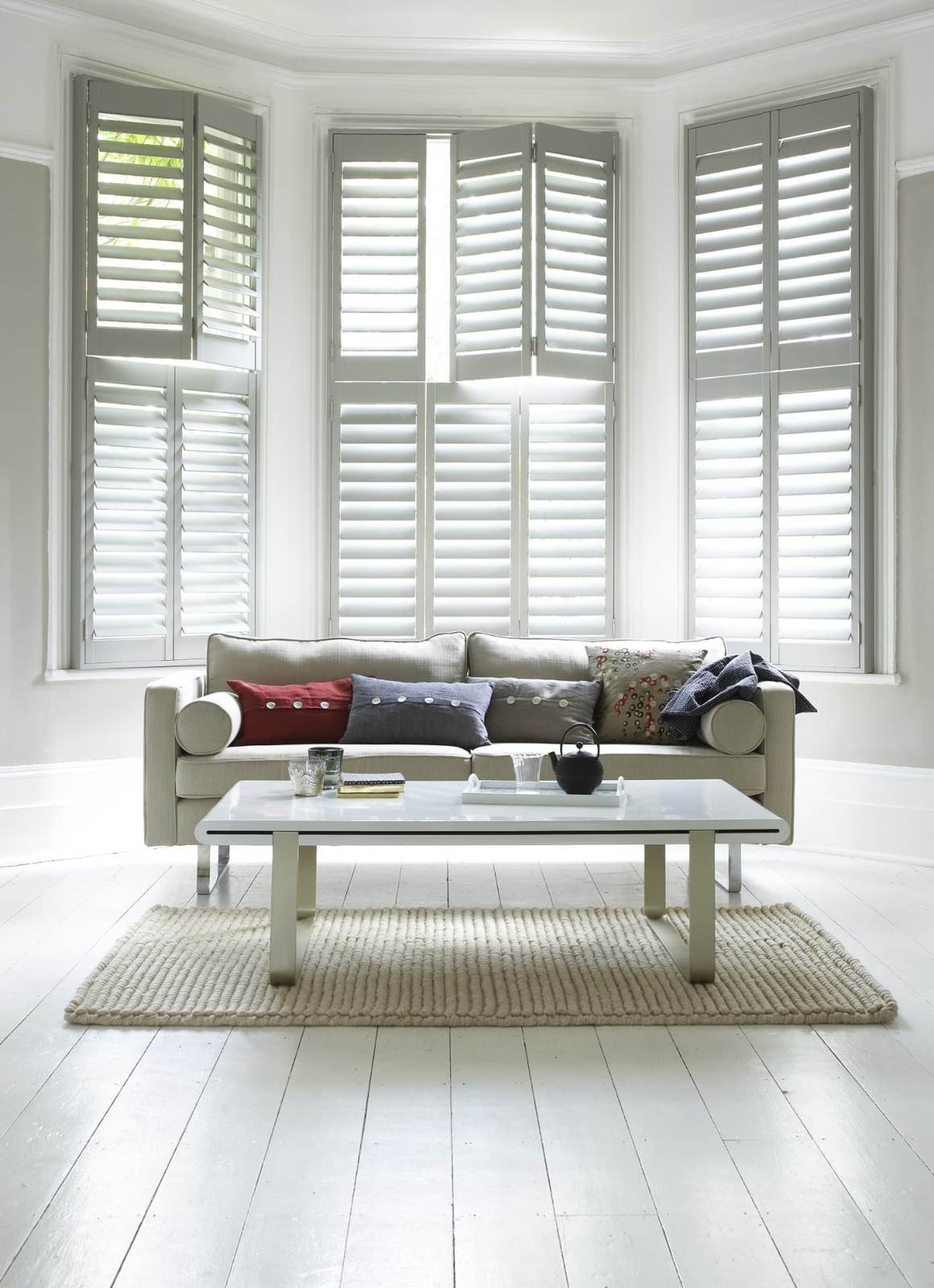
A louvre blocks a line of sight, not light in general. Angle the louvres so their outer edge points upward and anyone standing outside is looking into the underside of a series of solid blades. Light arriving from above still passes over them and into the room.
Tilt them the other way, outer edge down, and you get the reverse: the view out from a seated position improves and privacy drops. Most people settle on a single working angle within a week and rarely touch it again.
The important point is that privacy is a matter of angles, and the angles that matter depend on where people stand. A pavement two metres away is a very different problem from a house forty metres across a road.
Specifying for privacy
- Louvre size. Smaller louvres, 64mm or 76mm, sit closer together and close down tighter, which suits ground floor rooms directly on a street.
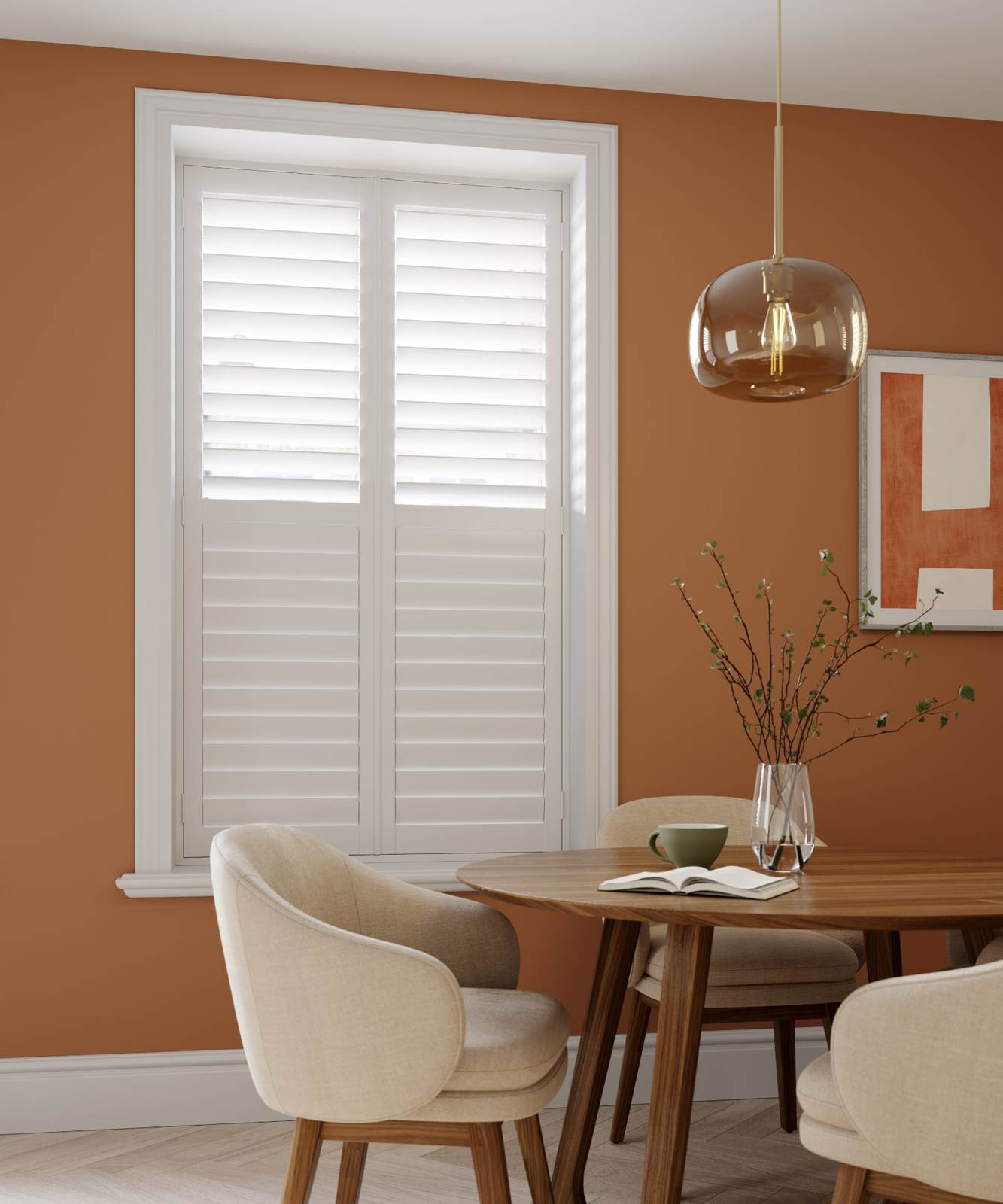
- Style. Tier-on-tier is the strongest privacy specification, because you can close the lower tier completely and leave the upper open.
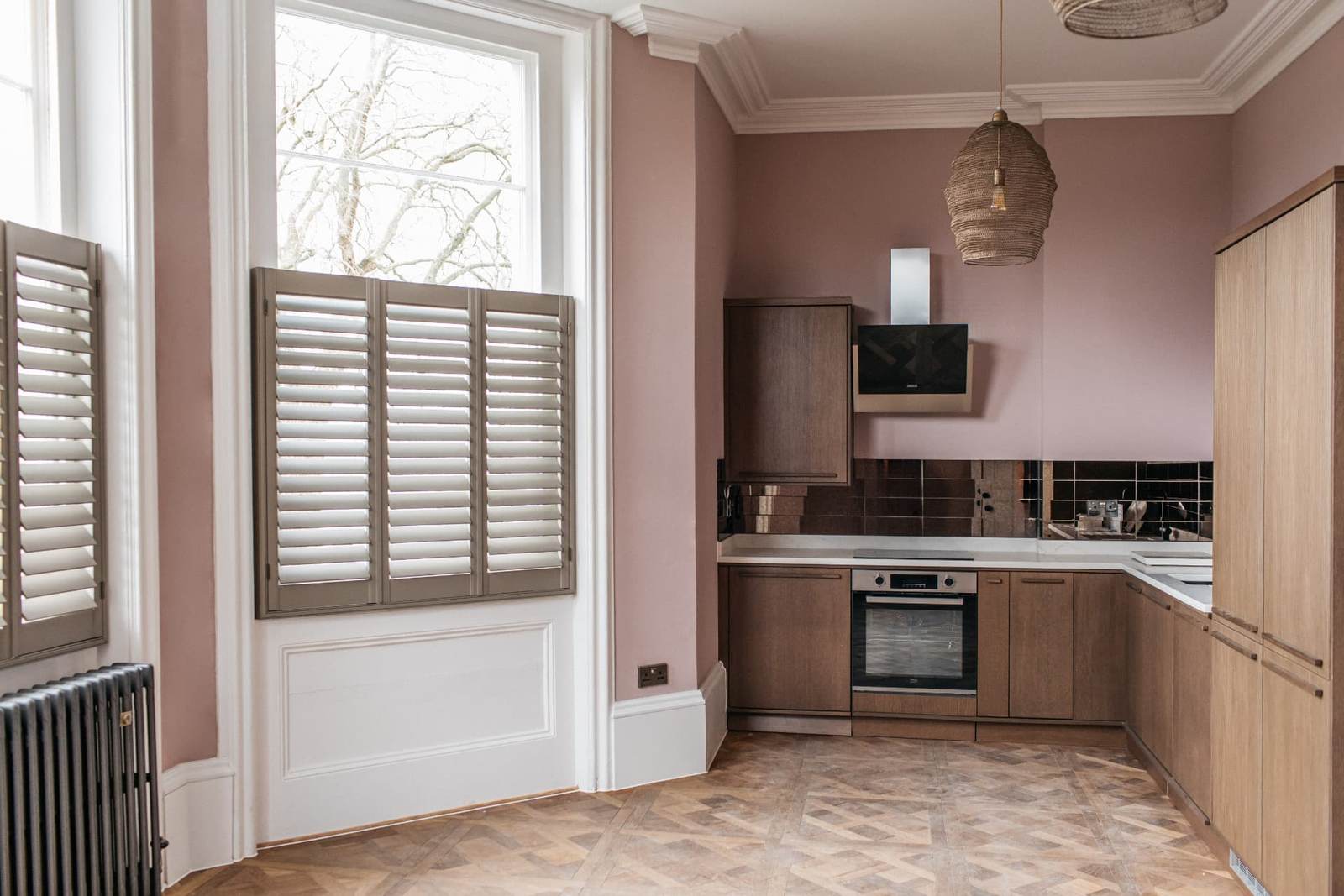
- Café style covers exactly the height that pavement traffic can see, and nothing above it.
- Tilt mechanism. A hidden tilt rod gives an unbroken louvre face and slightly better closure across the panel than a central rod.
- Frames. A properly surveyed frame closes tight to the reveal. Gaps at the edge undo good panels.
The honest limitation: after dark
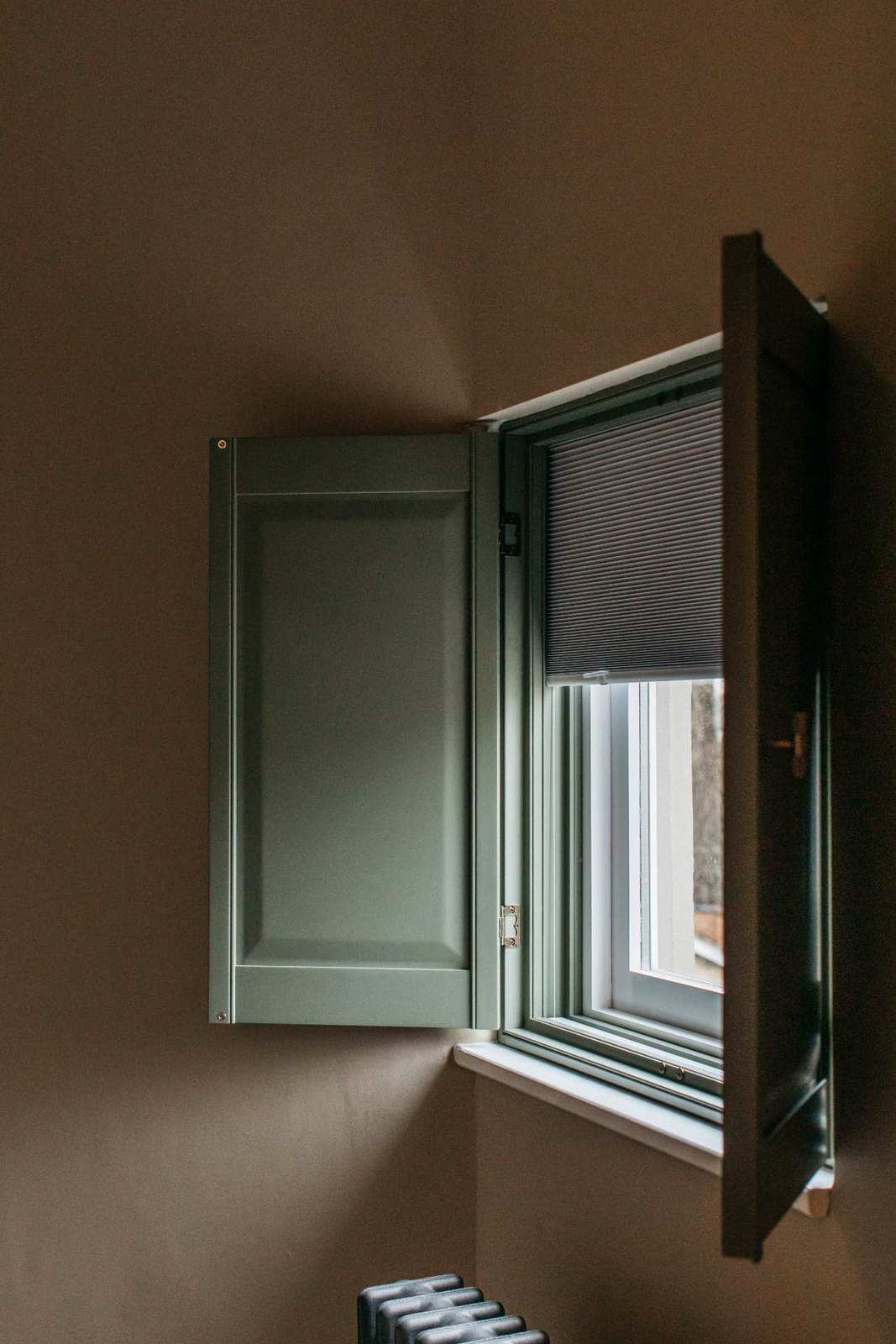
This is the part most shutter companies leave out. With louvres closed, a shutter is very private. But a lit room behind closed louvres still shows a faint pattern of light lines from outside, and if the louvres are tilted at all, a lit room is visible.
For most homes this is a non issue, because closed louvres in an evening give perfectly ordinary domestic privacy. In a bedroom directly opposite another window, or a ground floor bathroom on a busy footpath, it is worth taking seriously. A shutter with an integrated blackout blind behind it removes the question entirely.
Bathrooms and front doors
A bathroom is where privacy has to be absolute rather than good. Café style over the lower half of the window with a waterproof material is the specification we fit most often, and it keeps the top of the window clear for light and ventilation.
For a door side panel or a hallway window beside the entrance, a solid or tier-on-tier panel in a smaller louvre gives privacy without frosted glass, and it looks considerably better.
A café style kitchen on a path is the clearest demonstration of the principle: block the sight line at the height people actually walk, leave everything above it alone.
From our projects
Café style in a working kitchen
Privacy at the sink, daylight everywhere else.
See the project