Side by side
| Shutters | Curtains | |
|---|---|---|
| Interior style | Architectural. Reads as joinery and part of the window. | Soft. Adds texture, colour and weight to a room. |
| Warmth | A solid barrier closing against a frame, which reduces draught movement off the glass. | Interlined curtains are the most effective soft barrier available, particularly floor length. |
| Blackout | Not on their own. | Blackout lined curtains, well hung with generous overlap, get very close. |
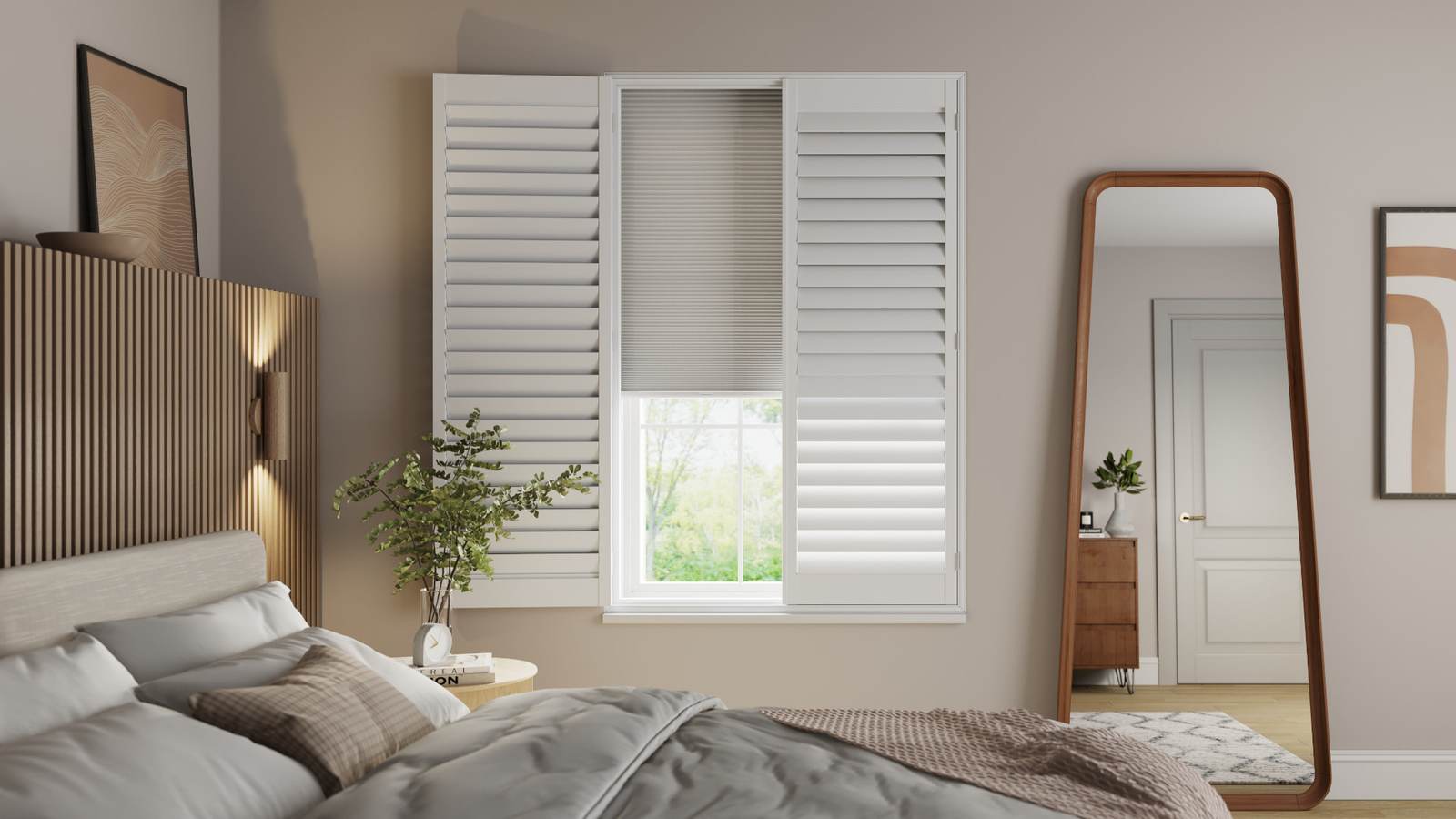
| Privacy by day | Excellent, and uniquely, privacy while keeping daylight. | All or nothing unless you add a sheer. |
| Cleaning | Dust with a dry cloth. Nothing comes down. | Periodic professional cleaning, and they hold dust and cooking smells. |
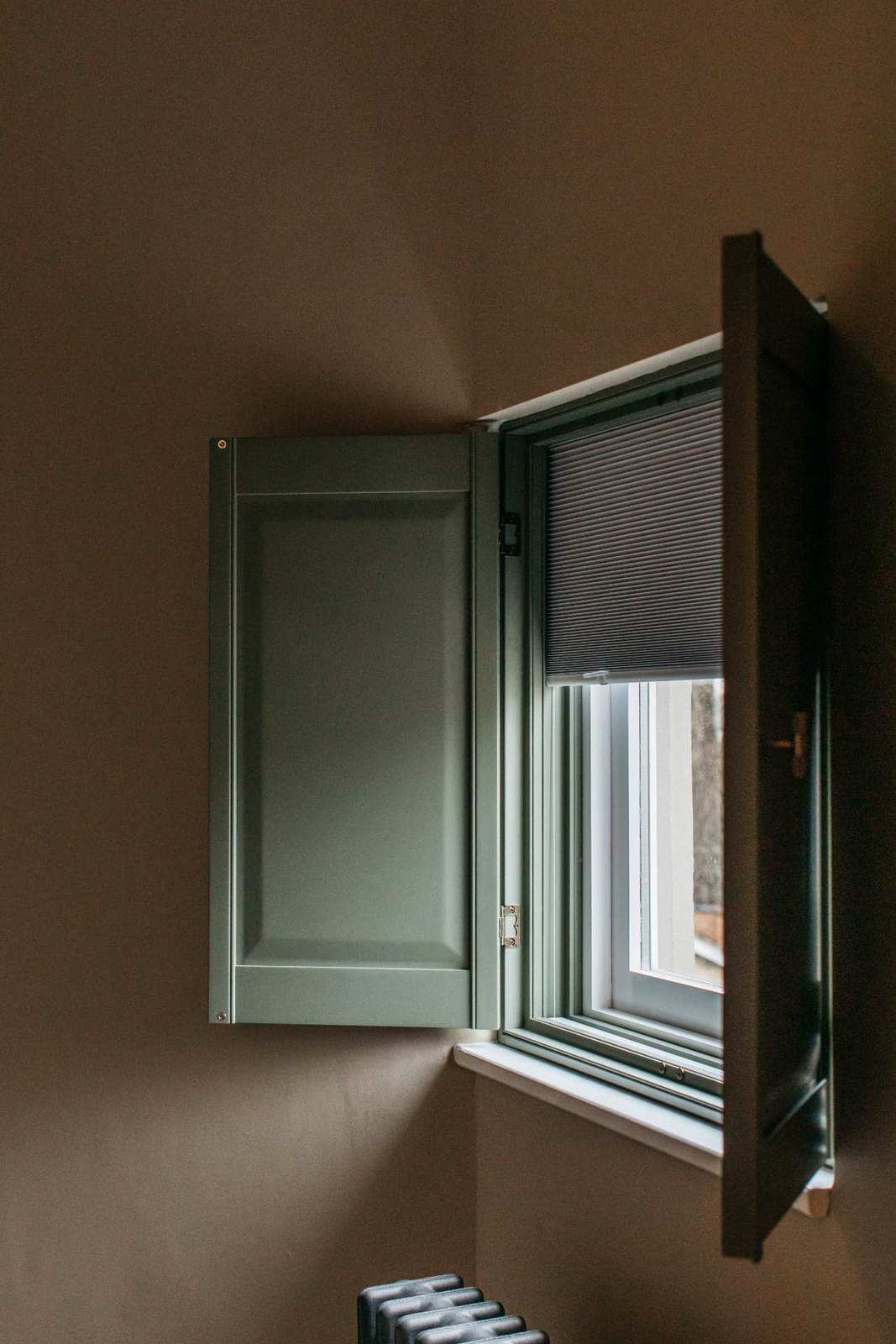
| Space | Sit inside the reveal. Nothing intrudes into the room. | Need wall space either side to stack back, and floor clearance. |
| Cost | Priced from the area of the opening, including VAT and installation. | Enormously variable. Good interlined curtains with a track can exceed shutter cost. |
| Lifespan | Ten to twenty years, guaranteed ten against structural defects. | Fabric fades in sunlight. Ten years is a good run for a south facing room. |
Where each one is clearly right
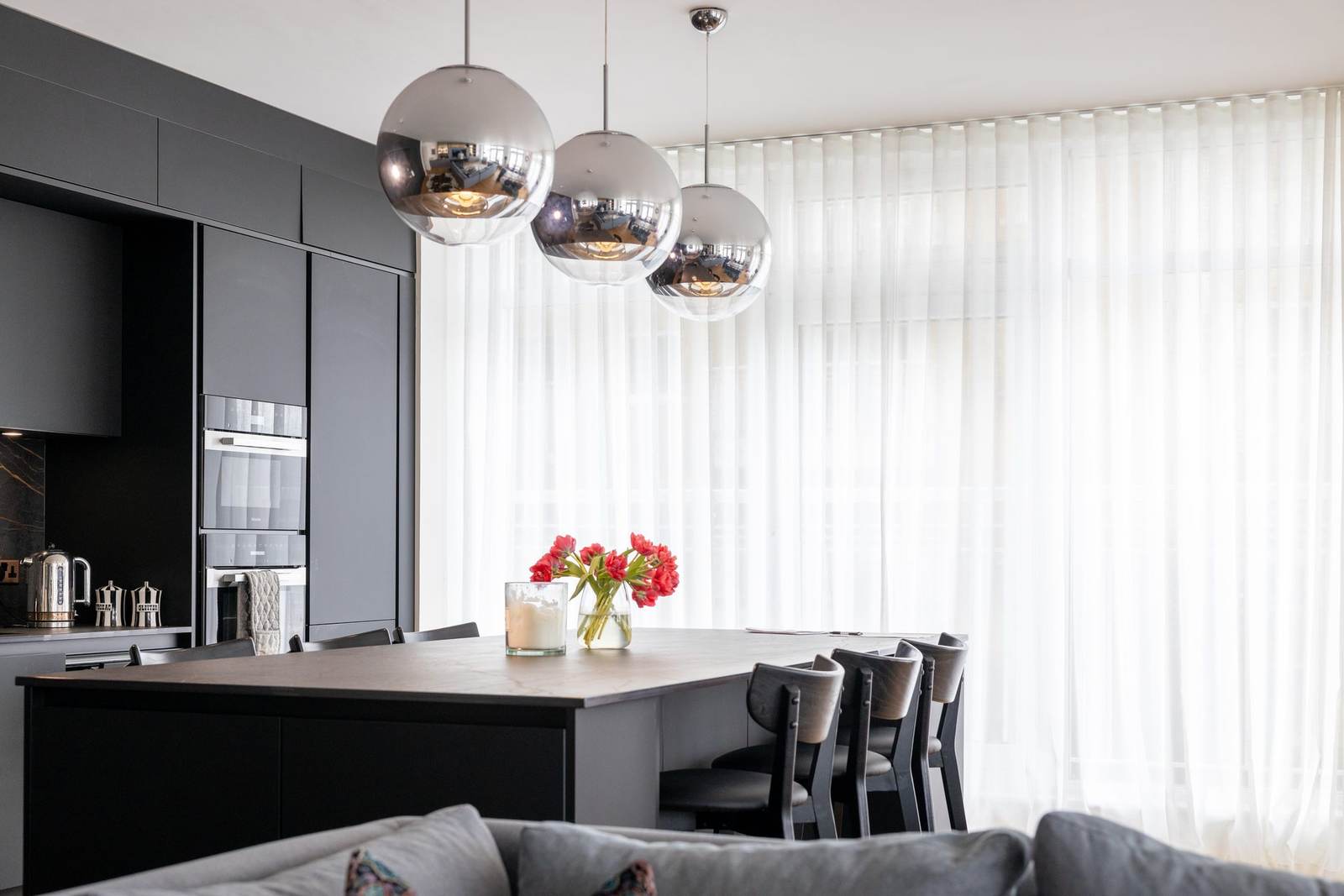
Curtains are the answer where softness is the point. A high ceilinged drawing room with tall windows and hard surfaces needs fabric, and no shutter substitutes for it acoustically or visually.
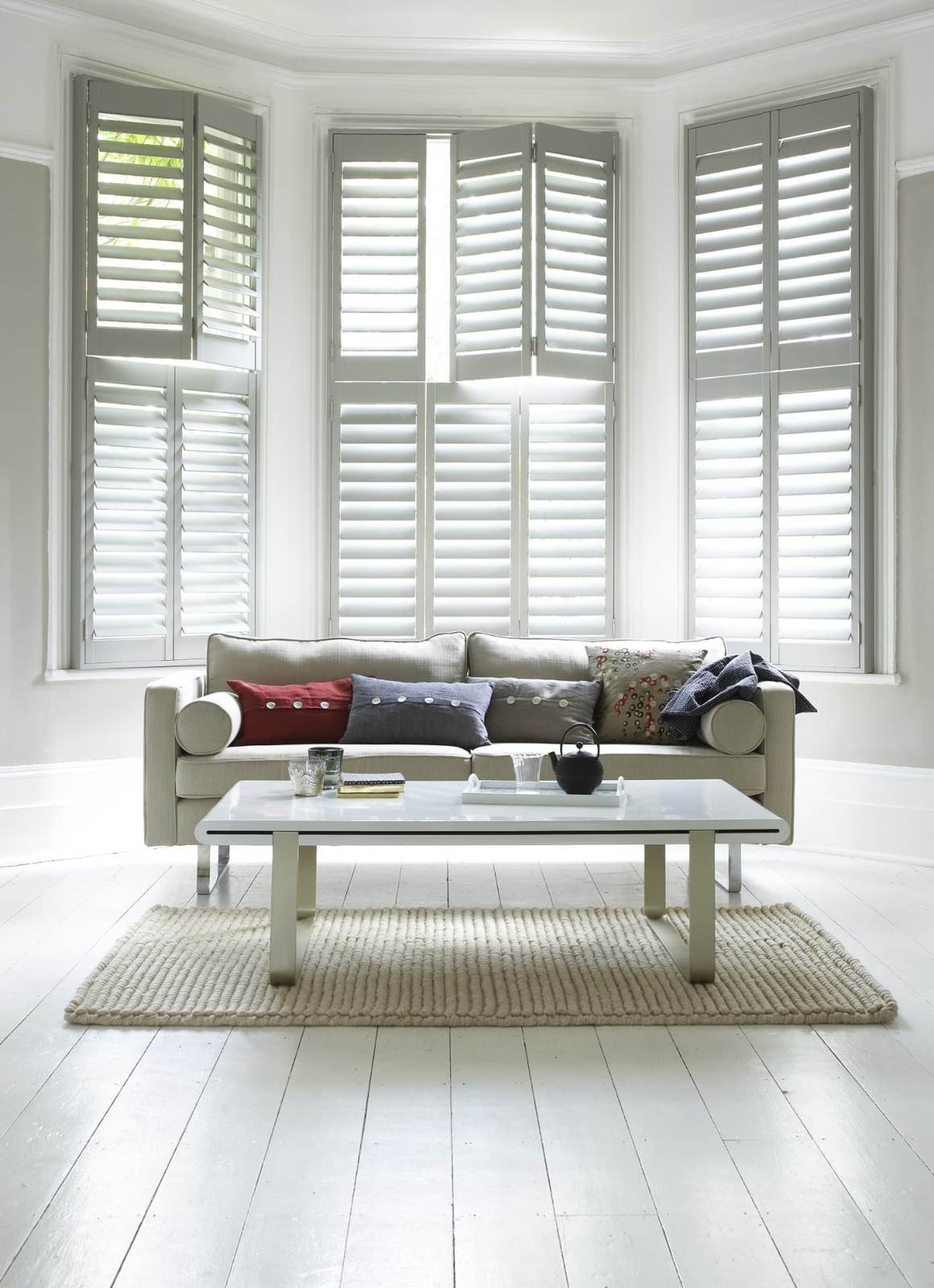
Shutters are the answer where the window is overlooked, where the reveal is shallow and there is nowhere for a curtain to stack back, where a radiator sits under the sill, or where a kitchen makes fabric impractical.
In a bathroom, curtains are rarely sensible and a waterproof shutter is the straightforward choice.
Can you have shutters and curtains together?
Yes, and it is one of the best combinations in interior design when it is done properly.
The rule is simple: the shutter sits inside the reveal, the curtain hangs outside it on a pole or track set above and wide of the opening. That way the panels can open fully without catching the fabric, and the curtain frames the window rather than fighting it.
Practically, the shutter does the daytime work and the curtain does the evening work. You get privacy with daylight during the day, warmth and softness at night, and if the curtains are blackout lined you also solve the darkness problem shutters cannot solve alone.
One caution: measure the pole projection before ordering. A curtain pole set too close to the wall will foul a panel that swings, and that is a five minute conversation at survey rather than a problem afterwards.